At glance:
- Choosing the right tile type, layout, and finish transforms a Charleston bathroom into a more functional, durable, and visually appealing space.
- Key decisions include tile material, surface zones (floor vs. walls vs. shower), waterproofing, and local climate considerations.
A bathroom tile remodel in Charleston, SC gives homeowners one of the highest-impact ways to refresh an aging bathroom without a full gut renovation. The right tile choices address both the humid Lowcountry climate and the design sensibilities that define the region.
Planning a bathroom tile remodel in Charleston, SC starts with understanding which surfaces need tile, what materials perform best in wet conditions, and how layout patterns affect the perception of space. Getting these fundamentals right before purchasing a single tile prevents costly mistakes.
Choosing the Right Tile Material for Each Surface
Not all tile materials perform equally in a bathroom. The surface location determines which material makes the most practical sense.
| Surface | Recommended Material | Key Benefit |
| Shower floor | Small-format porcelain or mosaic | More grout lines improve slip resistance |
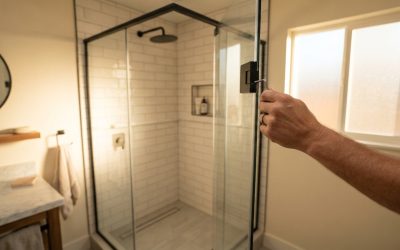
| Shower walls | Large-format porcelain or ceramic | Fewer grout lines reduce moisture intrusion |
| Bathroom floor | Glazed porcelain or natural stone | Durability and water resistance |
| Accent wall | Zellige, cement, or glass tile | Visual texture and personality |
Leading tile trends include earth tones and terracotta tiles, hand-painted tiles, and zellige, all of which work well as accent surfaces in Charleston bathrooms. For primary wet zones, porcelain remains the workhorse: it is dense, low-absorption, and resistant to the humidity common in coastal South Carolina.
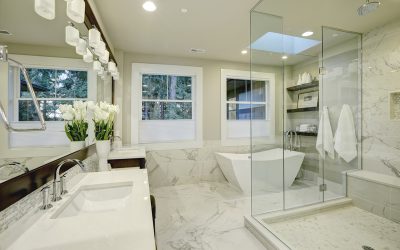
Incorporating tile that stretches from the floor to the ceiling is growing in popularity — often called tile drenching or material drenching — covering a large space in the same tile for a unified effect. This approach suits master bathrooms where visual continuity is a priority.
Layout Patterns and Their Effect on Space
Tile layout is as important as the tile itself. The same 12×24 porcelain plank reads very differently depending on how it is oriented.
- Horizontal stacked: Makes a narrow bathroom feel wider.
- Vertical stacked: Draws the eye upward, adding perceived ceiling height.
- Diagonal: Creates movement and works well in small square bathrooms.
- Herringbone: Adds texture and is well suited to shower floors and feature walls.
- Large-format (24×48 or larger): Reduces grout lines and creates a seamless, elegant appearance.
Geometric, mosaic, or hand-painted tile designs work well as backsplash focal points, and bold colors or metallic finishes can also create an eye-catching statement. For homeowners who want personality without committing to a bold field tile, a patterned floor with neutral walls is a reliable approach.
Waterproofing and Installation Standards
Design choices mean nothing if the tile installation fails. Bathrooms in Charleston homes face above-average humidity year-round, which makes proper waterproofing non-negotiable.
Continuous waterproofing membranes must be installed behind the tile — not just relying on grout or cement board — and sloped surfaces with proper drainage ensure water moves toward the drain instead of pooling behind the tile.
The Tile Council of North America (TCNA) Handbook is the industry’s primary reference for installation methods and outlines approved assemblies for wet areas in residential bathrooms. TCNA standards require a minimum of 95% mortar coverage in showers, with full support at tile edges and corners. Verifying that your installer follows these standards protects both the tile and the structure behind it.
A few practical installation checkpoints to confirm before work begins:
- Cement backer board or a mortar bed is used in wet zones — not standard drywall.
- A bonded waterproofing membrane is applied to shower walls and floors before tile.
- Movement joints are placed at changes of plane (floor-to-wall transitions).
- Grout is sealed after curing, particularly for natural stone and cement tile.
Frequently Asked Questions
What tile size works best for a small Charleston bathroom? Larger tiles (12×24 or 18×18) with minimal grout lines can make a small bathroom feel more open. Avoid very small mosaic tile on large floor areas, as the busy grout pattern can shrink the visual space.
Is natural stone a good choice for a Charleston bathroom? Natural stone such as travertine or marble is beautiful but requires sealing and more maintenance than porcelain. In a high-humidity coastal environment, sealing schedules should be followed consistently to prevent staining and moisture absorption.
How do I coordinate floor and wall tile without the bathroom feeling busy? A common rule is to vary the tile size or finish rather than the color. For example, a matte large-format wall tile paired with a smaller textured floor tile in the same tonal family reads as cohesive rather than cluttered.
Should I tile the entire shower ceiling? Tiling the shower ceiling is worth the added cost in steam showers or walk-in designs without a door. It prevents moisture damage to painted drywall and contributes to the tile-drenched aesthetic that is increasingly popular.
Start Your Bathroom Tile Project in Charleston
A well-planned tile selection process saves time, reduces waste, and produces a result that holds up for decades. Melcer Tile keeps over 200 different tile products in stock along with all the necessary setting materials and maintenance products, giving Charleston homeowners a wide range of options under one roof. Visit Melcer Tile at 4965 Dorchester Road in North Charleston to work with their design team and see full vignette displays before committing to a material.